





Riads & Hotels: Stop Giving 20% of Every Booking to the OTAs

Key takeaway: A 20% OTA commission is an example, not a rule. Your goal is not to ban third-party channels; it is to make direct booking a credible, measurable option whenever a guest already knows your property.
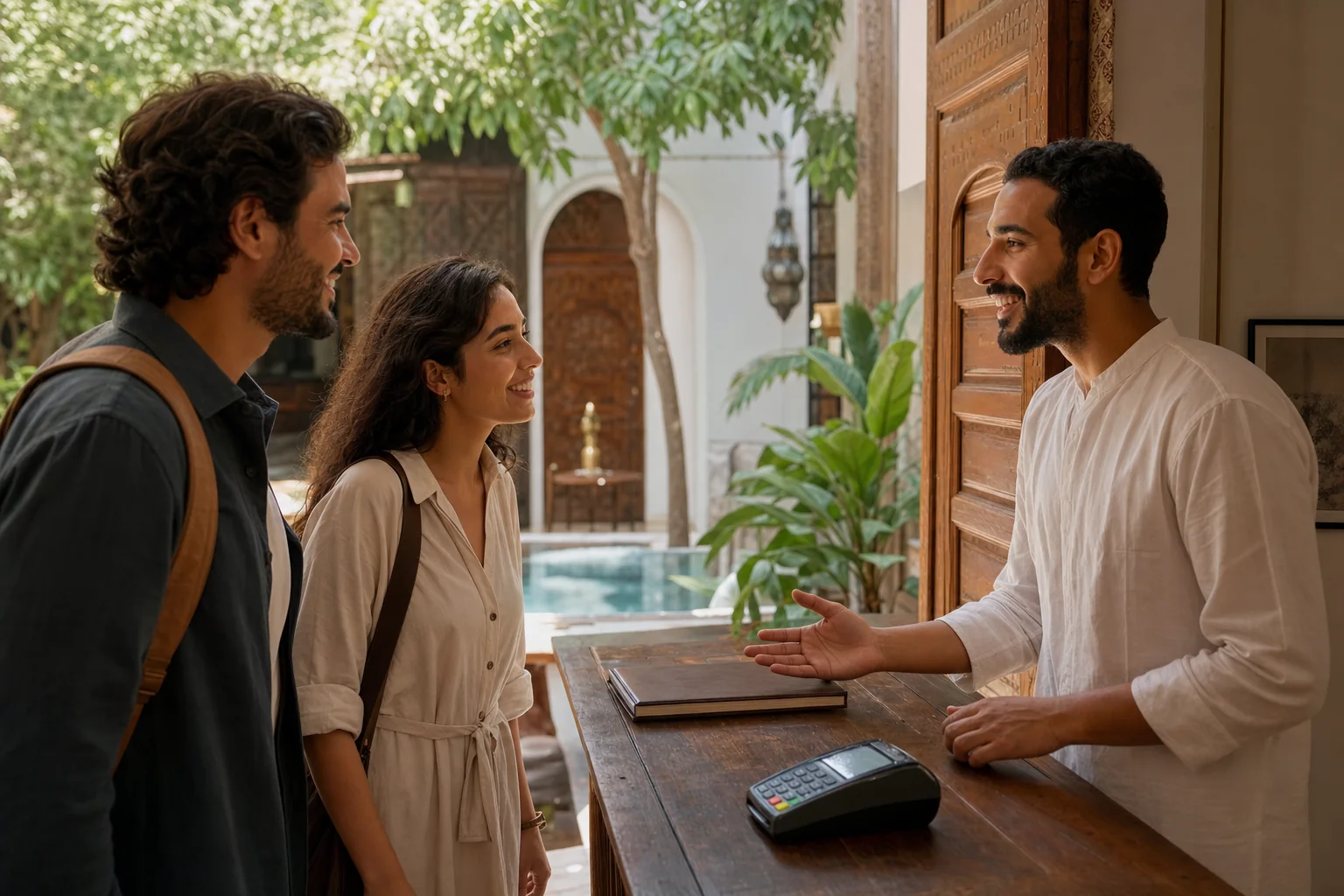

Audit the guest journey first.
Search your property by name on a phone. Can a traveller see accurate rooms, dates, prices, policies and a clear booking action in a few taps? If the official path is slower or less trustworthy than an OTA page, a new website alone will not change the channel mix.
Connect rates and availability where guests search.
Google’s Hotel Center documentation says that eligible partners can use free booking links, which link travellers directly to the booking landing page. Google ranks those links using signals that include consumer preference, value, landing-page experience and price accuracy, so keeping availability and rates current is operational work, not just marketing.
Give guests a reason to choose direct.
Avoid assuming that undercutting the OTA is allowed or sustainable. Depending on your agreement and market, a comparable direct offer can instead add value: clearer policies, direct support, a flexible check-in, a small on-property benefit, or a better explanation of the experience.

Make the economics visible
Review direct and OTA bookings side by side each month: booked revenue, commission, payment fees, cancellations, acquisition spend and repeat stays. Use the actual contractual rate for each OTA. A 15–25% industry range is useful context; it is not a substitute for your own ledger.
Keep the portfolio balanced
OTAs remain a discovery channel and can help fill periods where demand is uncertain. The durable strategy is a balanced portfolio: use third-party reach where it earns its cost, then improve the official journey so returning guests and high-intent searchers can book directly.
Applied example from my work
My direct booking service turns this commercial analysis into a measurable booking journey. The related guide on calculating OTA commission costs helps establish the baseline before a build begins.
If OTA commissions are limiting the profit from direct demand, contact me to build a clearer, conversion-ready direct booking path.